We start with your circumstances, assets and longer-term plans,
not a preferred lending product. As an independent,
whole-of-market brokerage, we compare the relevant financing
routes and work alongside your tax and wealth advisers where
appropriate. Our focus is where specialist thinking adds value,
not simply the size of your loan.
Yesterday, Thursday, February 5th, 2026, the Bank of England’s Monetary Policy Committee (MPC) delivered a decision that was, on the surface, a "hold." The Bank Base Rate remains at3.75%.
But a "hold" in February 2026 is not the same as a hold in 2024. This was a decision teetering on a knife-edge. The 5–4 vote split reveals a committee, and a country, deeply divided on the speed of the UK’s economic recovery.
While the headline rate stayed put, the internal friction at the Bank has sent a clear signal to the mortgage market: the "easy" part of the rate-cutting cycle is over. We are now in the territory of fine margins, where the difference between a successful property acquisition and a stalled deal comes down to strategy, not just the headline base rate.
For the clients we serve at Willow Private Finance, yesterday wasn't just about the 3.75% figure. It was about the repricing of risk for the remainder of 2026.
In this deep-dive analysis, we will explore why the Bank blinked, how the swap markets are reacting, and most importantly, how you should position your property debt strategy in light of this "hawkish pause."
The Anatomy of the Decision: Why 3.75%?
To understand where mortgage rates are going, we have to look at the "Why" behind yesterday’s 12:00 PM announcement.
The 5–4 Split: A House Divided
The most significant takeaway from yesterday was the razor-thin majority. Five members, led by Governor Andrew Bailey, voted to maintain the rate at 3.75%. Four members, a massive minority, voted for an immediate cut to 3.5%.
This is the narrowest margin we have seen in this cycle. It tells us that the Bank is inches away from further easing. However, the five members in the majority are haunted by the "last mile" of inflation.
The "April Effect" and Services Inflation
The primary reason for the hold is the "April Effect." The Bank is acutely aware that April brings a significant shift in the UK’s energy price cap and the annual re-indexation of many contracts and wages. The majority of the MPC wants to see the data from the first quarter before committing to another 25-basis-point drop.
Specifically,Services Inflationremains the "sticky" problem. While goods inflation has largely normalized, the cost of services, professional fees, hospitality, and domestic labor, is still rising at a pace that makes the Bank's 2% target feel fragile.
The Willow Perspective:The Bank is essentially taking an insurance policy against a spring inflation bounce. By holding at 3.75%, they are keeping "dry powder" in their policy arsenal. But for borrowers, this insurance policy has a cost: the continuation of higher borrowing expenses during the prime spring buying season.
Market Reaction: The Swap Market Shuffle
As we’ve often highlighted when discussingwhy mortgage rates don’t mirror base rate moves, the market prices in expectations long before the Governor stands at the podium.
The January Optimism
In early January, the SONIA (Sterling Overnight Index Average) swap markets, which dictate the pricing of fixed-rate mortgages, were pricing in a 65% chance of a cut yesterday. Because of that optimism, many lenders had already "pre-cut" their 2-year and 5-year fixed rates.
The Post-Announcement Correction
When the "Hold" was announced at noon yesterday, the swap markets corrected instantly. The 5-year swap rate ticked upward by approximately 12 basis points.
What does this mean for you?
If you were looking at a 3.89% five-year fix on Wednesday, don't be surprised if that product is withdrawn by Monday morning. Lenders who priced for a cut now find their margins squeezed. We expect a wave of minor repricing across the high street and specialist sectors next week.
Impact on High-Net-Worth & Private Banking
For our HNW clients, the 3.75% hold reinforces a shift in the lending landscape that we’ve been tracking throughout the 2025–2026 transition.
The Death of "Simple" Leverage
In the 2010s, debt was a commodity. In 2026, debt is a strategic tool. With the base rate at 3.75%, the "cost of carry" is significant. We are seeing a move away from maximum-LTV (Loan-to-Value) borrowing toward more sophisticated structures.
Yesterday's decision makesSecurities-Backed Lending (SBL)even more relevant. If your investment portfolio is yielding 6-7% and you can secure an SBL line at Base + 1% (4.75%), the "drag" on your wealth is far less than if you liquidated assets and paid a 20%+ Capital Gains Tax hit.
The Rise of the "Lombard Pivot"
We are increasingly advising clients to use Lombard lending as a bridge to acquisition. Given the 5-4 vote split, there is a very high probability of a rate cut in May or June. Using a flexible, interest-only SBL facility now allows you to act as a "cash buyer" in a stagnant market, with the plan to refinance into a term mortgage once the base rate hits 3.25% or 3% later this year.
The Buy-to-Let Crisis: ICR and the "Post-May 1st" Reality
The BTL sector is perhaps the most sensitive to yesterday's news. Landlords are currently caught between the Bank of England's caution and the regulatory shifts of the2026 Renters’ Rights Act.
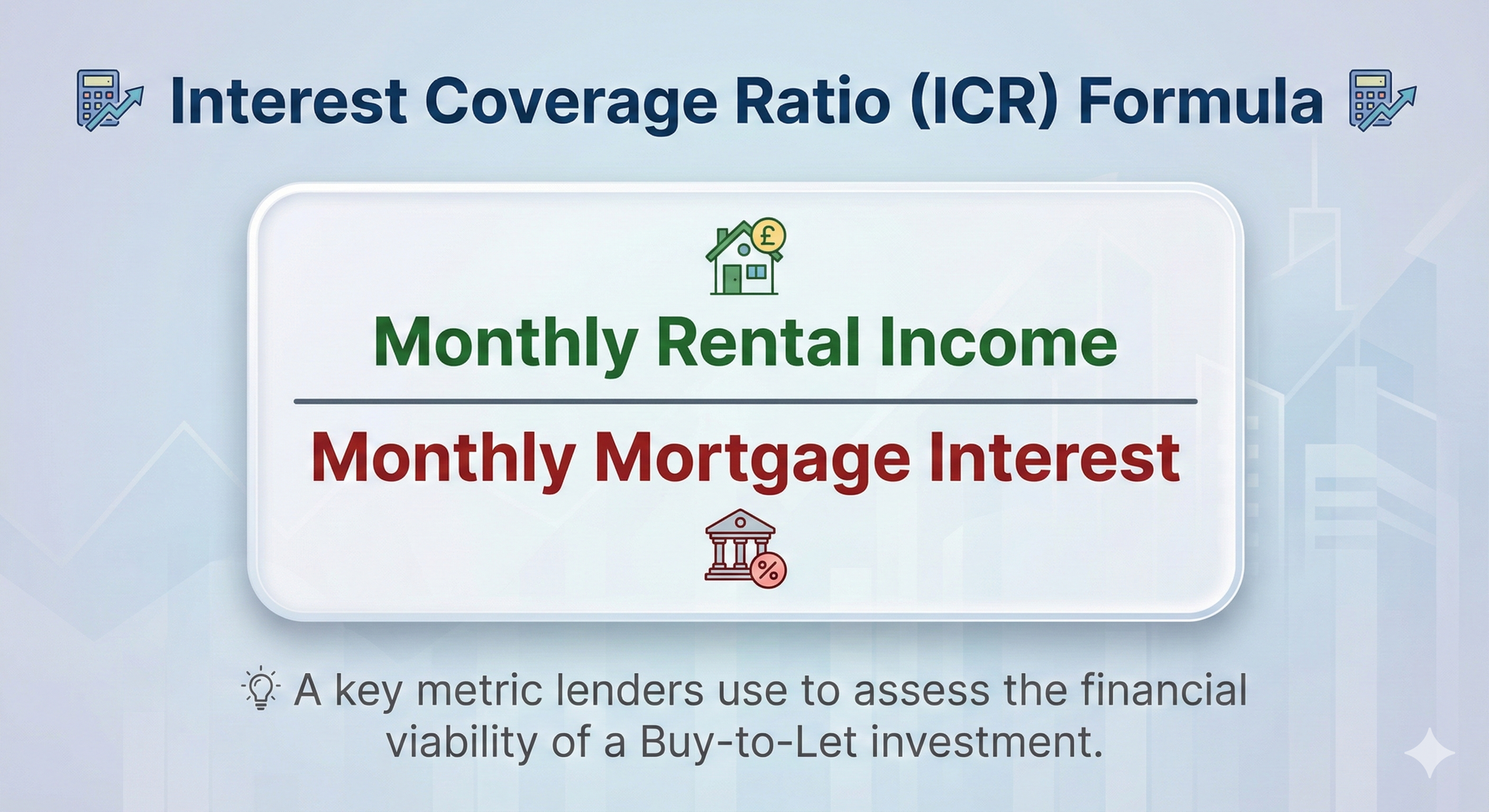
The Interest Coverage Ratio (ICR) Math
The hold at 3.75% means that stress tests for personally owned BTL properties remain prohibitively high.
For a higher-rate taxpayer, most lenders require an ICR of 145% at a stress rate of 5.5% or 6%. On a £500,000 mortgage, the rental income requirement is often higher than the actual market rent can support.
The 2026 Pivot: From Residential to Semi-Commercial
Mixed-use properties (retail on the ground floor, residential above) often benefit from different underwriting rules and higher yields, allowing them to clear the 3.75% base rate hurdles where vanilla flats fail.
Property Development: Managing the "Unsold Stock" Gap
For developers, yesterday’s hold is a double-edged sword. While it keeps the cost of senior debt from falling, it also signals that the "buying frenzy" many were hoping for in Q1 will be delayed.
The Mid-Build Capital Crunch
We are seeing an increase inMid-Build Capital Crunches.Projects started in late 2024 or early 2025 were often underwritten on the assumption that rates would be closer to 3% by now. The extra 75 basis points of "holding cost" is eating into the developer’s contingency fund.
The "Bridge-to-HMO" Strategy
One of the most effective strategies we are implementing for developers in 2026 is theBridge-to-HMO pivot. If a development of luxury flats isn't selling at the desired "trophy" price because of the rate hold, converting the exit strategy to a high-yield HMO (where the underwriting is based on room-by-room rental income) can provide a viable long-term refinance option that pays off the expensive development bridge.
International Buyers & Expats: The Currency Play
For our clients in the Middle East, the US, and the EU, the BoE’s decision has immediate currency implications.
The Sterling/Dollar Dynamic
A "hawkish hold" (holding rates when the market expected a cut) generally strengthens the Pound. For American lawyers or UAE-based expats buying in London, the 3.75% rate might be manageable, but if the Pound gains 3-4% against the Dollar because of the BoE's stance, the "effective cost" of the property has just risen significantly.
Expat Mortgage Stress Tests
As we detailed in our2026 Expat Mortgage Guide, lenders are now applying "Currency Haircuts" to foreign income.
If you earn in a volatile currency, the lender might only "count" 80% of your income for affordability. Yesterday’s hold means these stress tests remain at their most stringent.
Key Advice for Expats:If you are a UK lawyer practicing overseas, do not wait for the "perfect" rate. The administrative lead time for expat mortgages is stretching to 12-16 weeks. By the time you get your offer, the market may have already moved.
The Psychology of 2026: Why "Waiting" is the New "Overpaying"
The most common question we’ve received since yesterday’s announcement is: "Should I wait until the next meeting in March?"
Our answer in 2026 is a firmNo. Here is why:
The Value Emergence
As we noted in ourSeptember 2025 Prime London Update, value has begun to emerge precisely because rates are "sticky." When the Bank finally does make a series of aggressive cuts (likely in H2 2026), the floodgates will open.
The competition for prime assets will drive prices up by far more than the 0.5% you might save on your mortgage rate.
Execution Risk
In a 5-4 split environment, lender appetite is volatile. A lender that has an "appetite" for your complex income today might reach their lending cap for that sector by next month.Execution risk—the risk of the deal falling apart—is currently a much bigger threat to your wealth than the interest rate.
The Refinancing Cliff
If you have a fixed rate expiring in the next 6 months, holding out for a 0.25% drop could land you on a Standard Variable Rate (SVR) of 7% or 8% for a month or two while you wait for a new deal to complete. The math rarely works in favor of waiting.
Strategic Solutions for a 3.75% World
At Willow Private Finance, we don't just "find mortgages"; we structure property debt as part of a broader wealth strategy. In light of yesterday’s decision, here are the three frameworks we are using for our clients:
The "Hybrid" Approach
For those torn between fixed and tracker, we are seeing the return of the "Split Loan." We might fix 50% of the debt to provide a "ceiling" on costs, while leaving 50% on a tracker to benefit from the cuts that the four dissenting MPC members clearly want to see.
Title Splitting and Equity Recycling
For portfolio owners, the focus is onThe Alchemy of Title Splitting. If you own a multi-unit block on a single title, splitting it into individual leases can create "instant" equity, lowering your LTV and moving you into a cheaper interest rate bracket even while the base rate stays at 3.75%.
Family Investment Companies (FICs)
For intergenerational wealth, theFIC structureremains the gold standard for 2026. By holding property debt within a FIC, families can manage succession and Inheritance Tax (IHT) while utilizing corporate tax rates to offset the higher cost of borrowing.
Mortgage Strategy
A Bank Rate Decision Is Only One Piece Of The Mortgage Puzzle
As this article explains, the Bank of England's 3.75% base rate is only one factor influencing today's mortgage market. Swap rates, lender funding costs, affordability stress tests, income assessment and individual underwriting policies all play a significant role in determining the rates available and how much you can borrow.
Visit our Residential Mortgages Hub
to explore detailed guides on mortgage rates, fixed versus tracker mortgages, remortgaging strategies, affordability, complex income, higher borrowing multiples and how lenders are making decisions throughout 2026.
Frequently Asked Questions: BoE February 2026 Rate Decision
1. Why didn’t the Bank of England cut rates when inflation is falling?
While headline CPI has dropped significantly, the Bank is focused on "internal" inflation. Services inflation and wage growth are still higher than the 2% target comfortably allows. The 5–4 vote split shows they are incredibly close to a cut, but the majority wants to see the impact of the "April Effect" (contract re-indexations and the new energy price cap) before committed to lower rates.
2. Will mortgage rates go up now that the Bank has held the rate?
We don't expect a massive spike, but many lenders had already "priced in" a cut. Because that cut didn't happen, the cost of funding for banks (swap rates) ticked up slightly yesterday. You may see some lenders withdraw their lowest-tier products and replace them with slightly more expensive versions in the coming days.
3. I'm a higher-rate taxpayer; why is my Buy-to-Let mortgage being declined on "affordability"?
This is due to theInterest Coverage Ratio (ICR). Lenders generally require your rent to be 145% of your mortgage payment, stressed at a rate of 5.5% or 6%. At a 3.75% base rate, the "math" for personally owned properties often fails because the required rent is higher than what the market actually pays. This is why many are pivoting toLimited Company (SPV)structures, which often have a lower ICR requirement (125%).
4. Should I choose a tracker or a fixed-rate mortgage right now?
With a 5–4 vote split, the next move is almost certainly down. Atrackerallows you to benefit instantly when that cut eventually happens. However, a short-term fix (2-year) provides certainty in a volatile market. Many HNW clients are now opting for a "split loan", fixing half the debt for security and keeping half on a tracker to ride the downward curve.
5. Is it better to wait for a rate cut before I buy?
Waiting is a gamble. If the Bank cuts rates by 0.5% later this year, the resulting surge in buyer demand could push property prices up by more than the amount you save on interest. In the prime market, it is often better to negotiate a better purchase price now while others are hesitant, and refinance later if rates drop significantly.
6. How can I borrow more than the standard 4.5x or 5x income multiples?
For professionals with complex income (bonuses, profit shares, or retained earnings), high-street banks are often too rigid. Private banks and specialist lenders in a3.75% worldlook at "Global Assets" and "Net Worth" rather than just salary. We can often secure higher multiples by demonstrating the strength of your balance sheet or utilizingSecurities-Backed Lending (SBL)to bridge any shortfall.
7. What is "Top-Slicing," and can it help my application?
Top-slicing is when a lender uses your surplus personal income to cover a shortfall in the rental coverage (ICR) of an investment property. If your property doesn't generate enough rent to meet the 145% test, but you have a high salary, certain lenders will allow that salary to "plug the gap" and approve the full loan amount.
The Path Forward
Yesterday’s decision to hold at 3.75% was a signal of the Bank’s commitment to "finishing the job" on inflation. But for the property market, it was a signal that the recovery will be a slow burn, not a wildfire.
The 5-4 vote split is the most important number of the week. It tells us that the "Next Move" is almost certainly down, the only question is the timing.
In this environment, the winners are those who prioritize certainty of funding and sophisticated structuring.
Whether you are looking to remortgage your own home, buying at a trophy asset in Belgravia, an HMO portfolio in the Midlands, or a refinancing of a family estate, the strategy must be more than just "getting a good rate."
At Willow Private Finance, we specialise in the "hard" deals, the ones that high street banks and automated algorithms don't understand.We navigate the 3.75% world by looking at the person, the asset, and the global wealth structure, not just the base rate.
Tailored advice for individuals, businesses and professional advisers seeking sophisticated financial solutions.
At Willow Private Finance, we understand that every client has different ambitions, financial circumstances and long-term objectives. Whether you are purchasing property, refinancing existing borrowing, protecting your family or business, or looking to unlock wealth through specialist lending, we build solutions around your individual needs rather than forcing you into standard products.
As an independent, whole-of-market brokerage, we provide access to residential mortgages, buy-to-let finance, bridging loans, development finance, commercial lending, private banking and Lombard lending facilities, alongside a comprehensive range of personal and business protection solutions. Our expertise extends to UK and international clients, high-net-worth individuals, company directors, investors, expatriates and borrowers with complex financial structures.
By combining deep technical expertise with relationships across mainstream lenders, specialist lenders and private banks, we help clients secure funding, structure borrowing efficiently and protect the assets, income and people that matter most. Whatever stage of your financial journey you are at, our team is here to provide clear, strategic advice that delivers confidence and long-term value.
From mortgages and private banking to Lombard lending, business finance and protection planning, Willow Private Finance delivers bespoke solutions for even the most complex financial requirements.
The UK property finance market moves quickly. Mortgage rates change, lenders update criteria, specialist products launch and market conditions evolve every week. Keeping on top of these developments can be difficult, whether you're a homeowner, landlord, developer, investor or professional adviser.
Our free weekly briefing brings together the stories that matter most, alongside expert commentary from Willow Private Finance, helping you stay informed without having to monitor multiple news sources.
Weekly summary of the UK's biggest property finance stories
Residential, buy-to-let, bridging and development finance updates
Private banking, Lombard lending and HNW market insights
UK expat and overseas buyer developments
Market commentary from experienced finance specialists
Free to subscribe with no obligation
Delivered every Week.
Join a growing community of homeowners, investors, developers, accountants, solicitors, estate agents and wealth advisers receiving Willow's weekly Property Finance Briefing.
About the Author
Wesley Ranger is the founder and lead strategist at Willow Private Finance, a premier UK-based mortgage brokerage specializing in high-net-worth (HNW), expat, and complex-interest property finance.
With a career built on navigating the intricate corridors of private banking and specialist lending, Wesley has become a trusted voice for entrepreneurs, legal professionals, and international investors seeking more than just a standard "off-the-shelf" mortgage. Since July 2025, he has been at the forefront of documenting the shifting UK economic landscape, producing daily insights that bridge the gap between macroeconomic policy—like the Bank of England’s latest decisions—and practical, wealth-preserving property strategies.
Wesley’s approach is defined by a "zero-inference" philosophy: he believes that in a 3.75% world, success is determined by hard data, structural precision, and the ability to unlock liquidity where others only see debt. When he isn't deconstructing Interest Coverage Ratios or structuring multi-jurisdiction deals, he is a dedicated advocate for the "move or improve" philosophy, helping clients treat their primary residences and global portfolios as dynamic components of their broader financial legacy.
Important Notice
This article is provided for general information purposes only and does not constitute personal financial or mortgage advice. Mortgage suitability, affordability assessments, lender criteria, documentation requirements, and product availability depend on individual circumstances and may change at any time. Remortgaging decisions should take into account not only interest rates, but also regulatory requirements, income verification standards, and the risk of changes to personal or financial circumstances. You should always seek tailored, regulated advice before entering into, changing, or redeeming a mortgage. Willow Private Finance Ltd is authorised and regulated by the Financial Conduct Authority (FCA No. 588422). Registered in England and Wales.